Wagga Wagga Art Gallery · 2024
Look at Me Notes from the Curators
- Venue
-
- Dates
- Curators
- Presented with
-

Curatorial statement
Collections have a way of appearing more complete than they really are.
A work enters a gallery. It is given a number, a title, a maker, a date. It becomes part of a collection and, eventually, part of the institutional record that sits around it.
But records have gaps.
Sometimes a name is missing. Sometimes a relationship has been forgotten, a history reduced to a line of text, or a connection to place left undocumented. What we know about an object can appear settled simply because no one has returned to ask another question.
This exhibition began with those gaps.
Alongside Gallery staff, we returned to three works: Kate and Bianca, The Blue Tie and Untitled.
Each had a connection to Wagga Wagga. Each also carried absences in the information surrounding it.
Those absences became the thread we followed.
Notes on one work
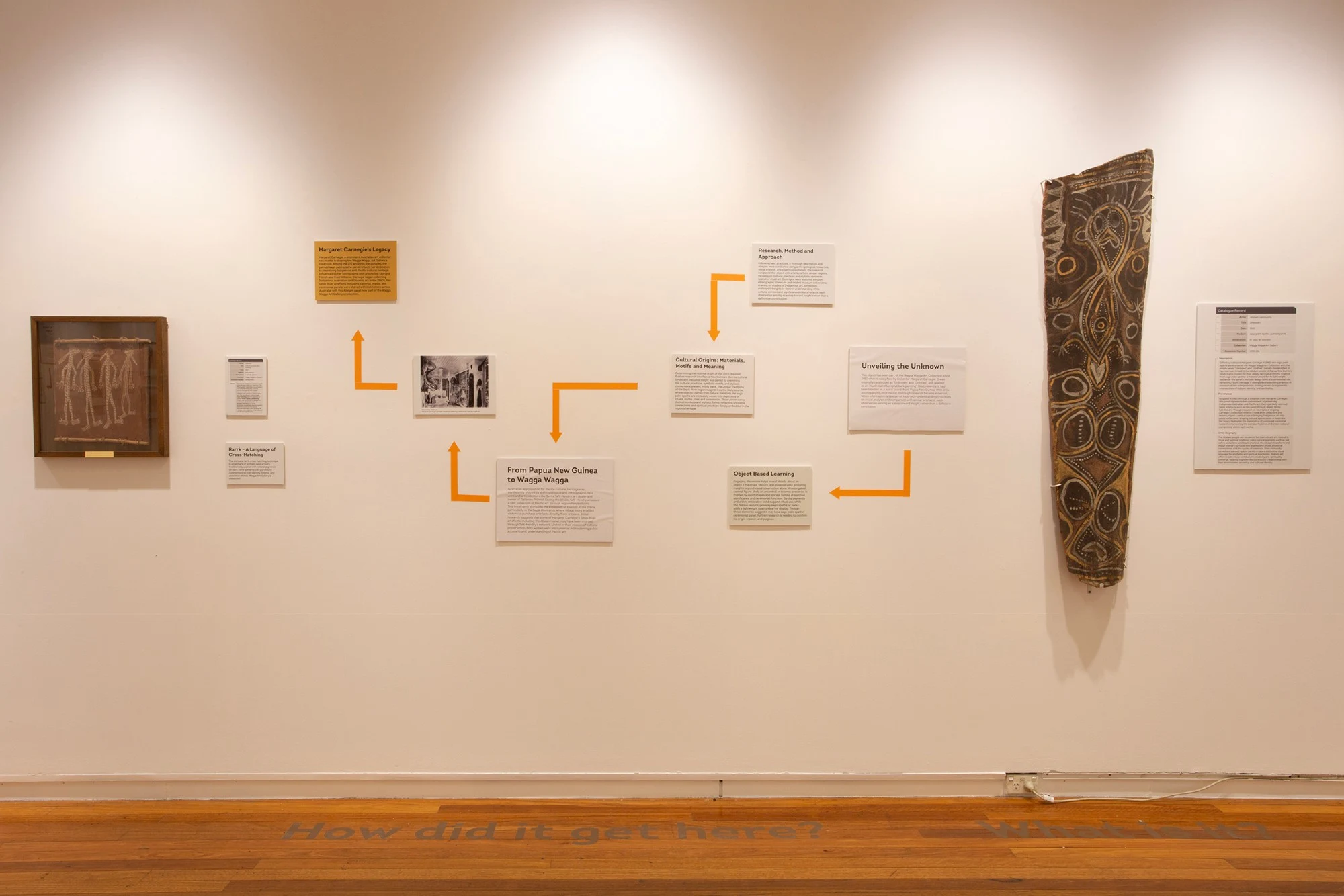
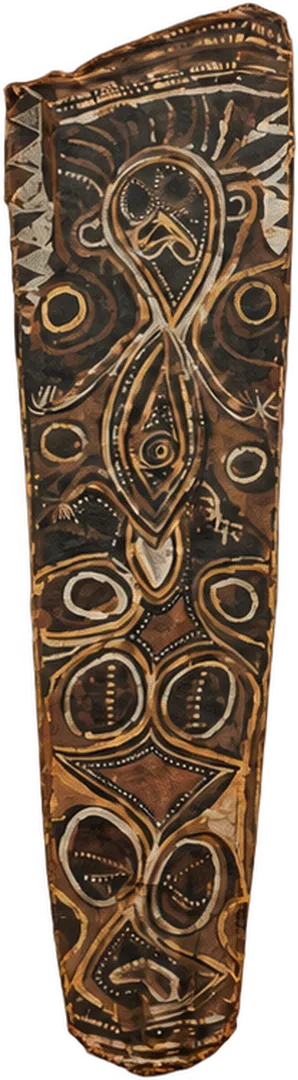
Of the three works, I chose Untitled: a painted panel given to the Gallery by Margaret Carnegie in 1980 and recorded simply as Unknown.
There was very little else.
So I began with four questions.
What is it?
Where did it come from?
Who made it?
How did it get here?
These notes follow where those questions led.
Looking closer
The first step was simply to look.
A central figure.
Ovoid shapes.
Spirals.
Earth pigments.
A thin, fibrous surface.
Some details were immediately visible. Others only emerged through closer attention. Repeated forms. Lines within lines. Areas of dense pattern interrupted by open space.
The object was narrow and elongated, irregular at its edges, its painted surface following the contours of the material beneath it.
The material appeared vegetal rather than wooden: thin, fibrous and naturally shaped rather than carved. It suggested a sheath or spathe, but identifying the plant required comparison.
There were clues here, but not yet answers.
Four regions, three dead ends
Comparison provided the next clue.
Similar painted objects in museum collections were identified as being made from sago palm spathe, and many came from Papua New Guinea.
That narrowed the search, but not enough.
The Highlands did not fit. Gope boards from the Southern region offered one comparison, but were carved from hardwood. Malagan traditions in the Islands suggested another, although their materials and forms differed again.
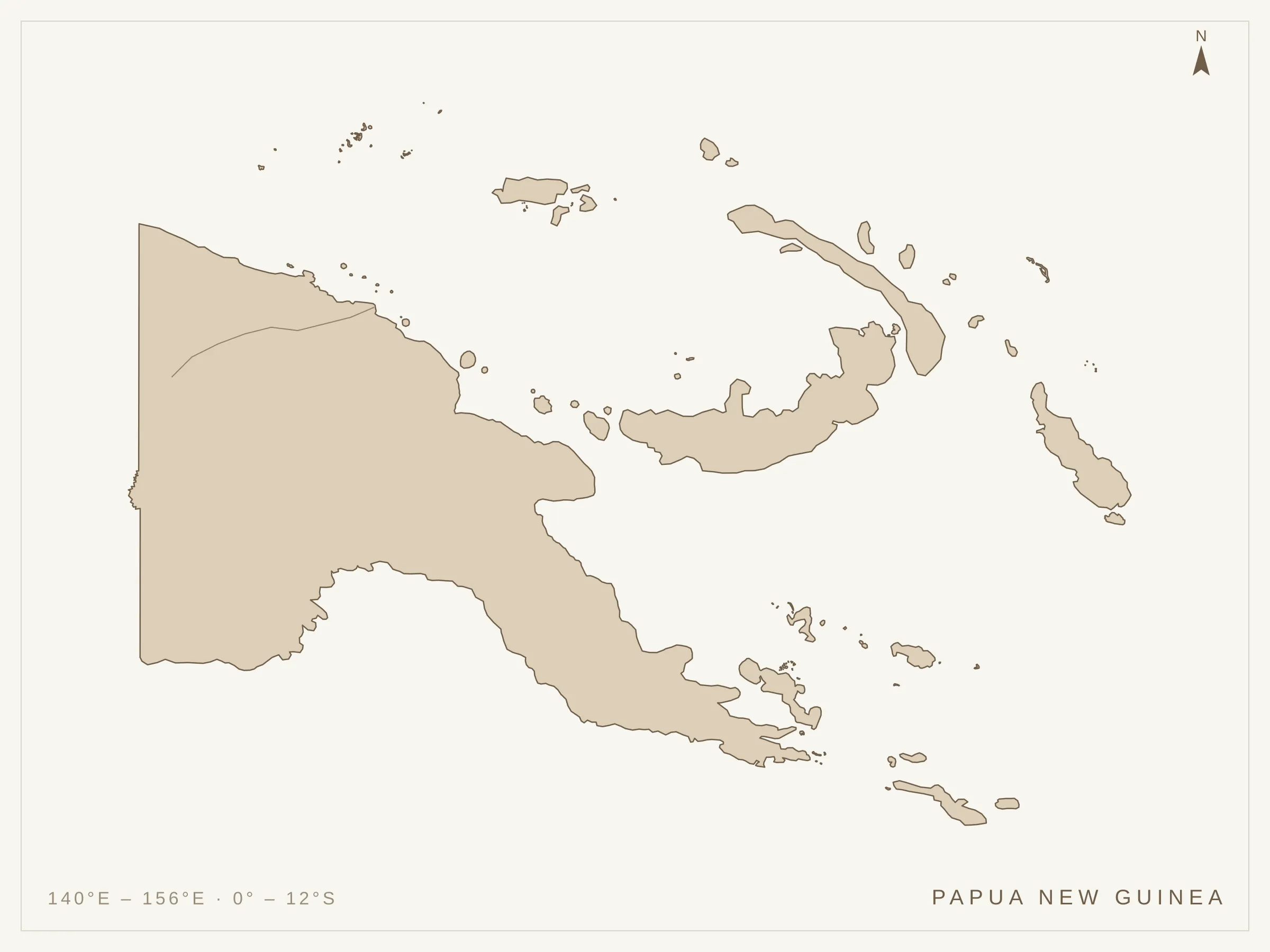
The strongest parallels appeared in the Momase region, around the Sepik River, where Abelam artists used painted sago palm spathe in ceremonial contexts.
Material, form and place were beginning to converge.
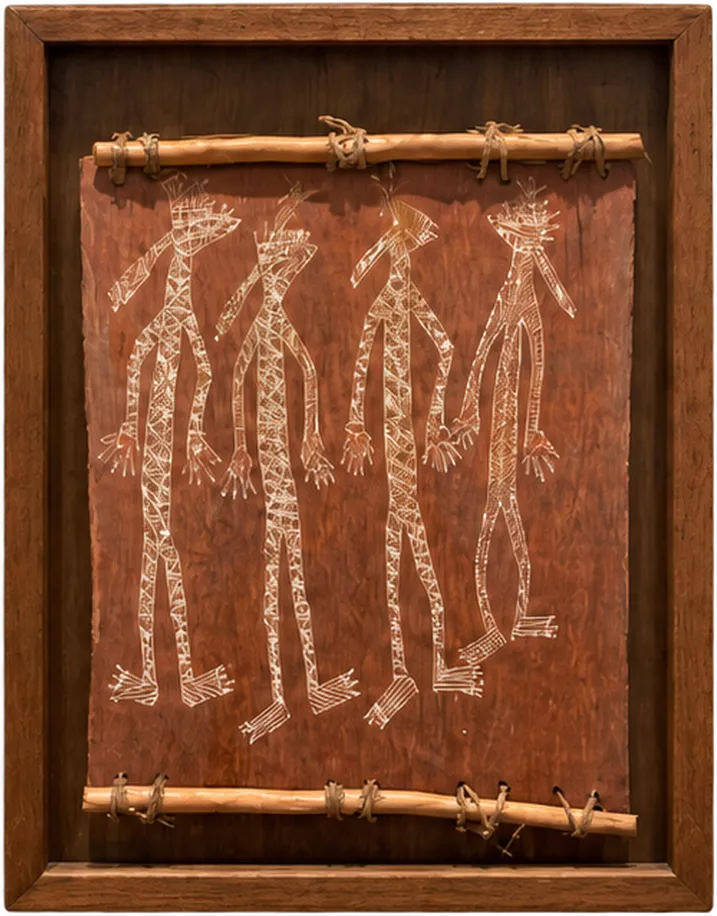
- Unknown
- Four Figures, Central Australian Bark Painting, 1969
- Bark painting
- 370 × 330 mm
- Wagga Wagga Art Society WWAS1969.6
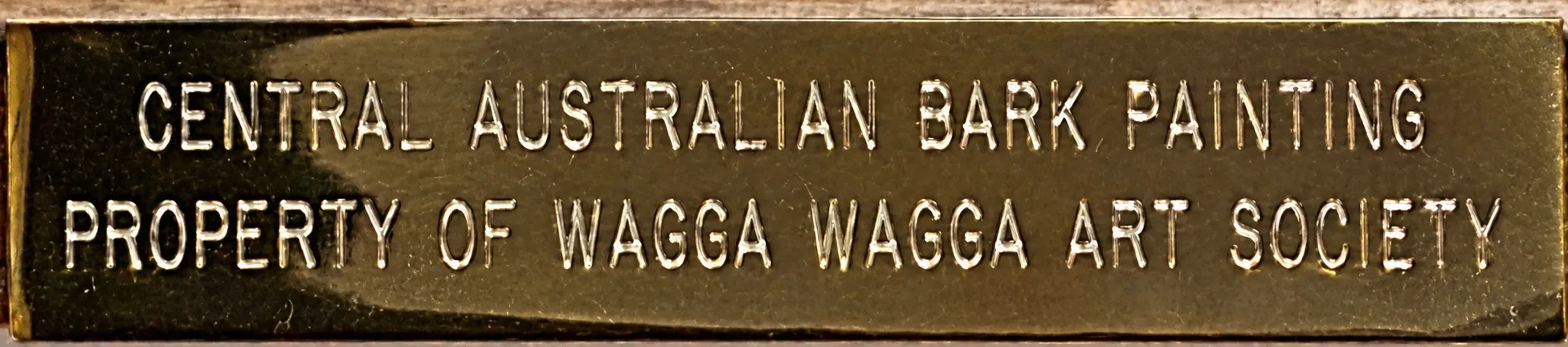
When the record is wrong
Comparison did more than narrow the search. It also exposed another problem in the collection.
The panel was not the only work in the collection whose record needed checking.
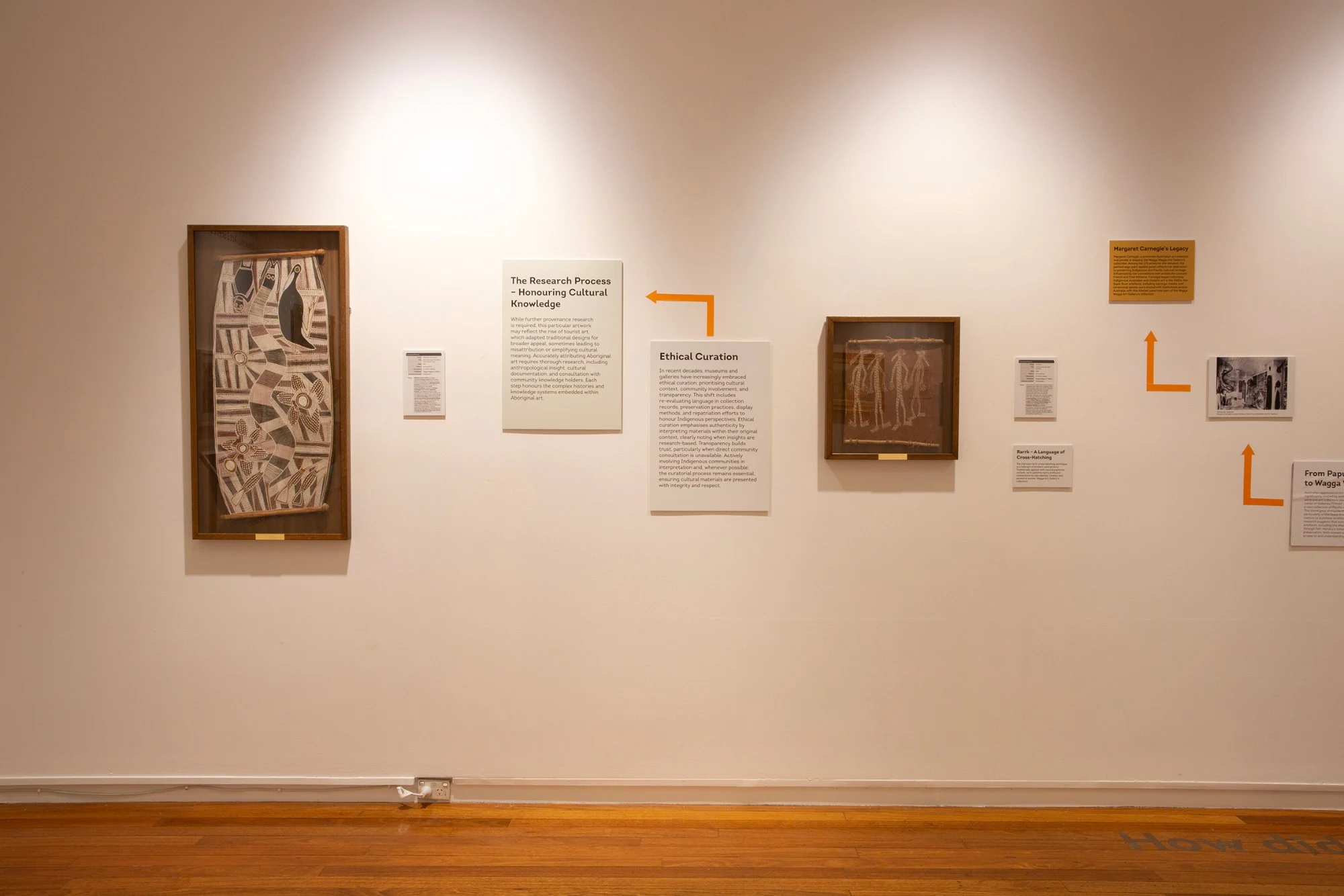
Affixed to the frame of this bark painting was a small brass label: “Central Australian Bark Painting. Property of Wagga Wagga Art Society.”
The label was confident. The object disagreed. Its bark support, rarrk cross-hatching and figures pointed not to Central Australia but to Arnhem Land.
Without research, a record can carry an error for decades.
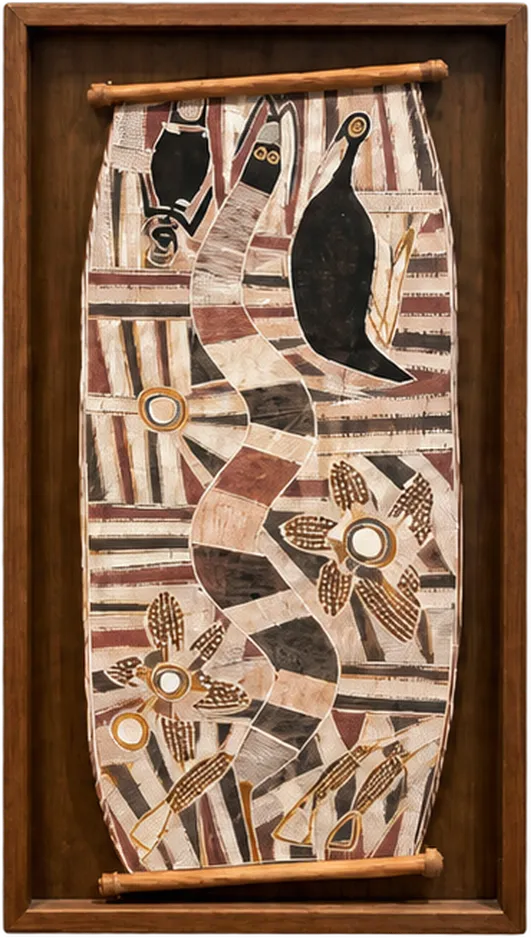
- Mithinarri Gurruwiwi
- Bark Painting From North East Arnhem Land, 1971
- Bark painting
- 1150 × 550 mm
- Wagga Wagga Art Society WWAS1971.2
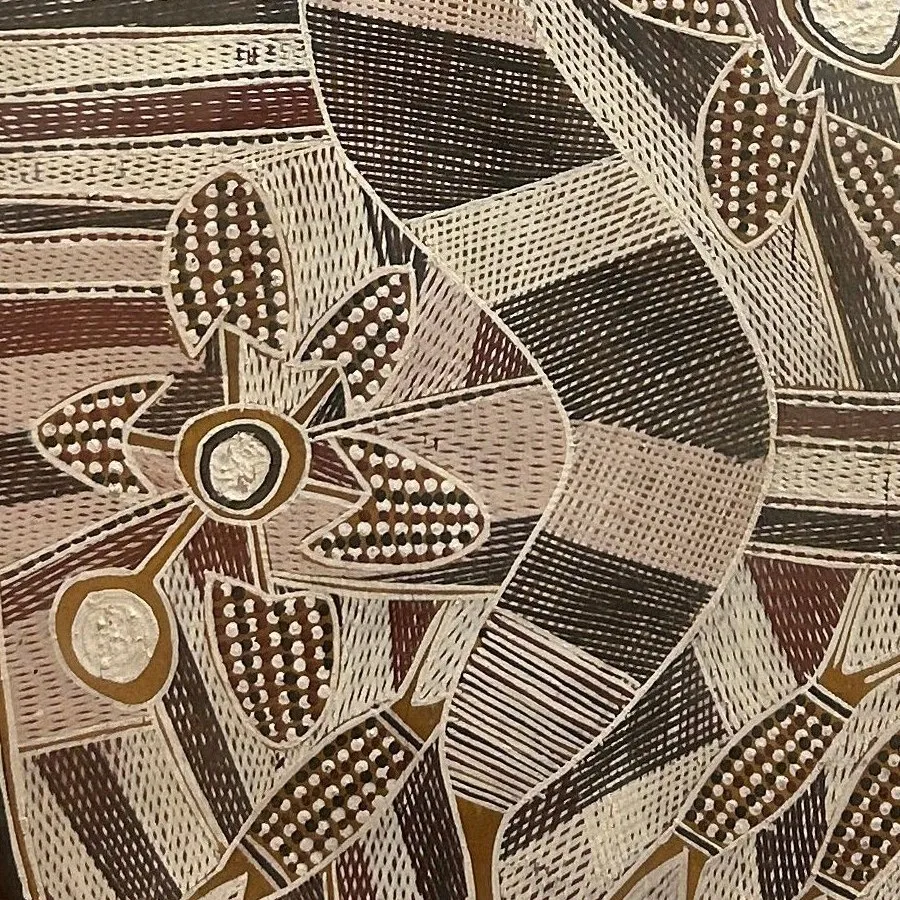
Rarrk is built from fine, repeated lines of cross-hatching, painted in natural pigments on bark.
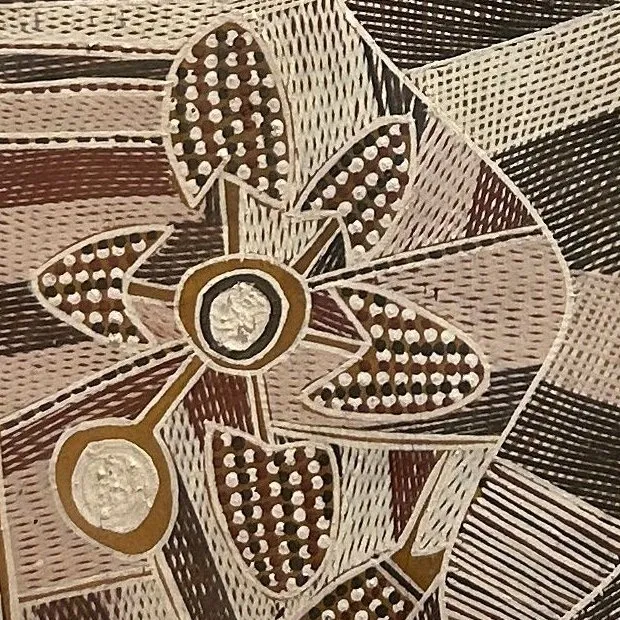
But it is more than a technique. Rarrk can carry relationships to clan, ancestral stories, totems and Country.
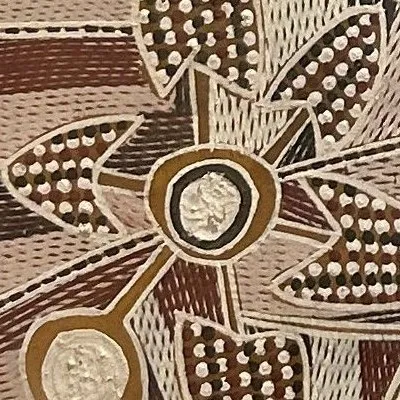
Gurruwiwi’s name and place remain with the work. The lines do not arrive as pattern alone. Some of the knowledge around them remains attached.
What a good record holds
Mithinarri Gurruwiwi’s painting shows the other side of the same lesson.
Here the record was made with care. The artist is named, the region recorded, the year kept.
Because of that, the painting can be read, and its rarrk understood as more than pattern.
The Abelam
The research could not recover the name of an individual maker.
But Unknown did not mean without origin, knowledge or authorship.
The materials, forms and comparisons pointed towards the Abelam of Papua New Guinea’s Sepik region, where painted spathe panels form part of ceremonial life.
A name remained missing.
A cultural context did not.
The magic of painting
Once the cultural context became clearer, the painted surface could be read differently.
Within Abelam traditions, paint is not simply decoration. Colour, material and symbol can carry spiritual significance and participate in what an object means and does.
The surface was no longer just something to describe.
It was part of understanding what had been made.
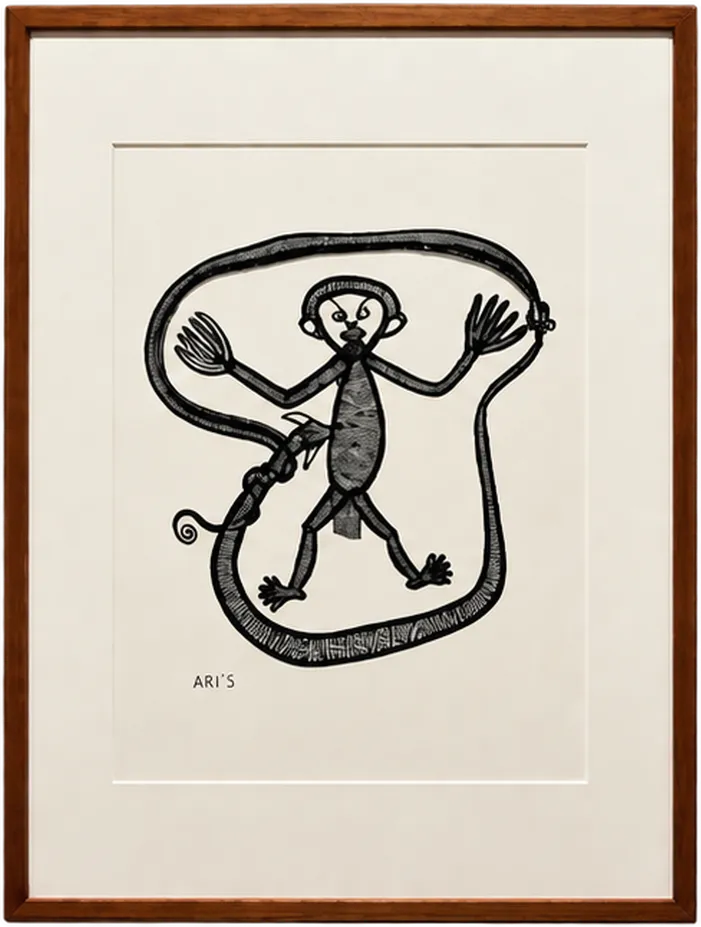
- Timothy Akis
- Untitled, 1975
- Black ink on paper
- 750 × 560 mm
- Wagga Wagga Art Gallery 1980.32
The picture widens
Timothy Akis offered a very different visual language.
Working in ink on paper, his figures draw on the mythological, animal and human worlds around him, but through a distinctly contemporary practice.
Placed near the Abelam panel, his work complicated any idea of Papua New Guinean art as a single tradition.
How it got here
The panel entered the Gallery through Margaret Carnegie.
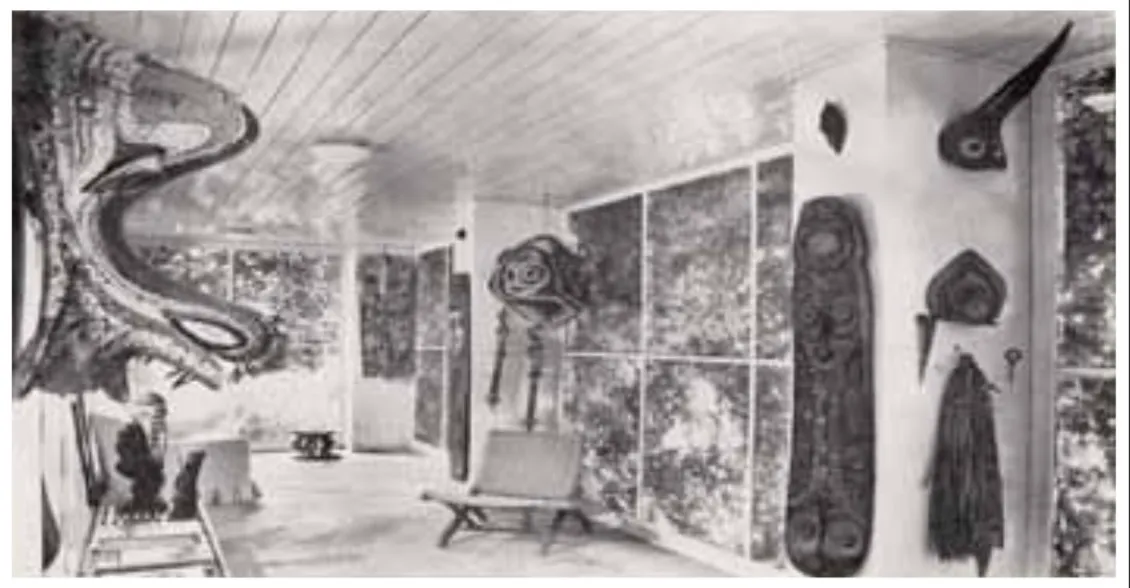
A photograph of her home brings that part of the story into view. Indigenous Australian and Pacific works sat among the furniture, books and objects of everyday life. This was not simply a collection on paper. It was something she lived with.
Carnegie began collecting Indigenous Australian and Oceanic art in the 1960s. She later gave 170 works to Wagga Wagga Art Gallery, including this panel.
Margaret Carnegie. Wagga Wagga. 1980.
What the record says now
The panel entered the collection as Unknown and Untitled.
Research now connects it to the Abelam community of Papua New Guinea's Sepik region and identifies it as a painted sago palm spathe panel.
Its individual maker remains unknown.
The record is fuller.
It is not finished.
- Artist
- Abelam community
- Title
- Painted sago palm spathe panel
- Date
- 1980
- Medium
- Sago palm spathe, natural pigments
- Origin
- East Sepik, Papua New Guinea
- Dimensions
- 1530 × 400 mm
- Provenance
- Gift of Margaret Carnegie, 1980
- Collection
- Wagga Wagga Art Gallery
- Accession
- 1980.126
The object itself has not changed.
What surrounds it has.
After the notes
The exhibition
Views
The walls, and how they went up
-
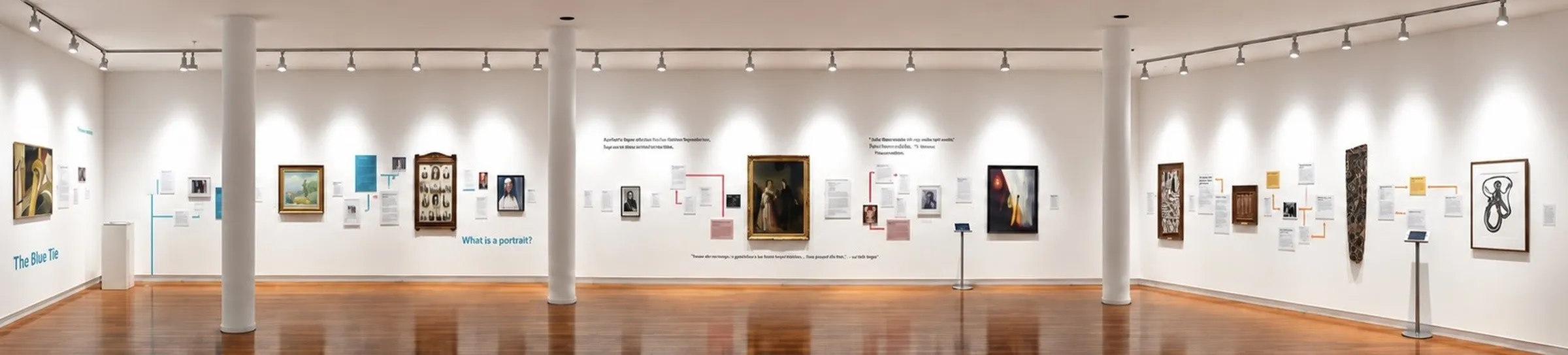
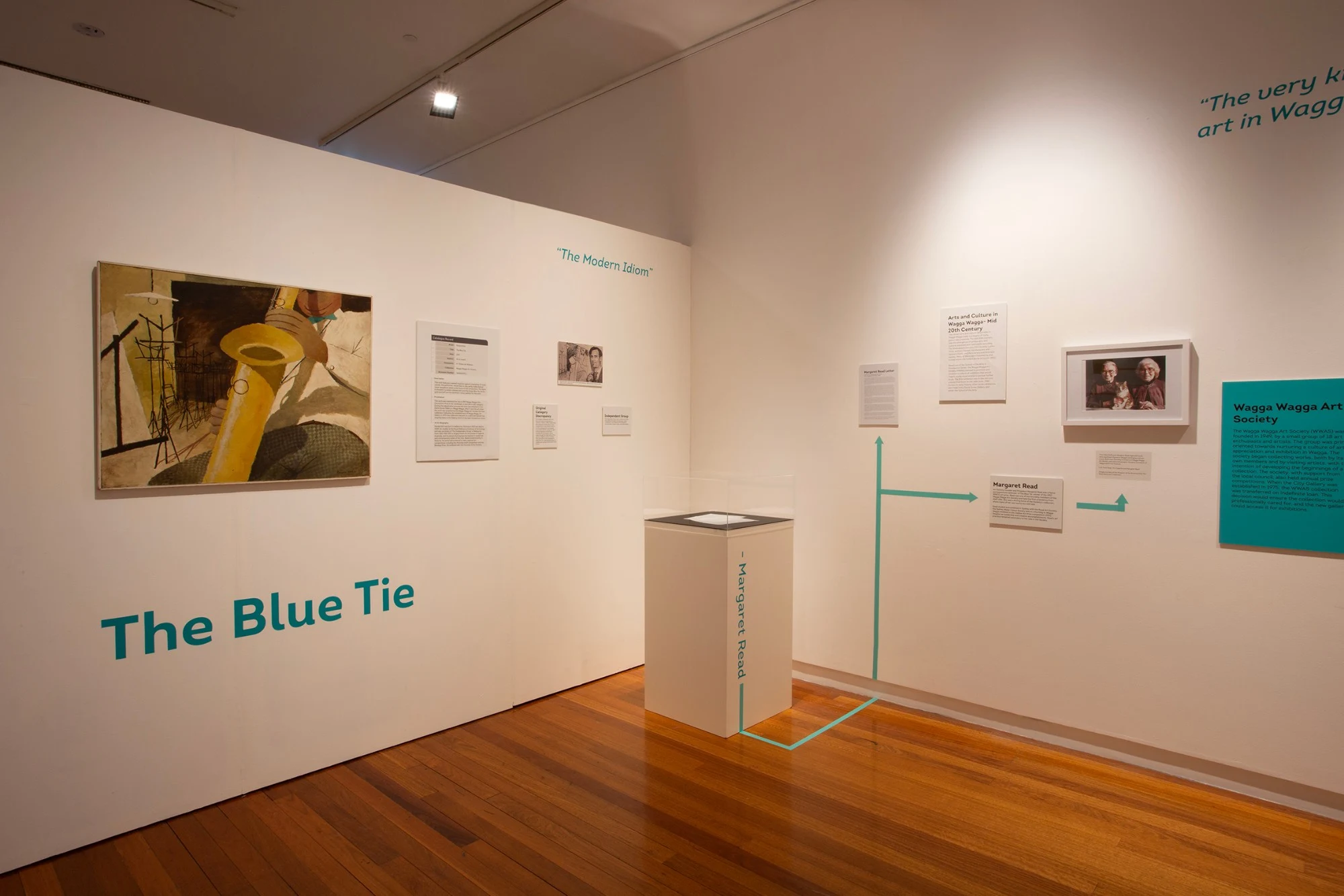
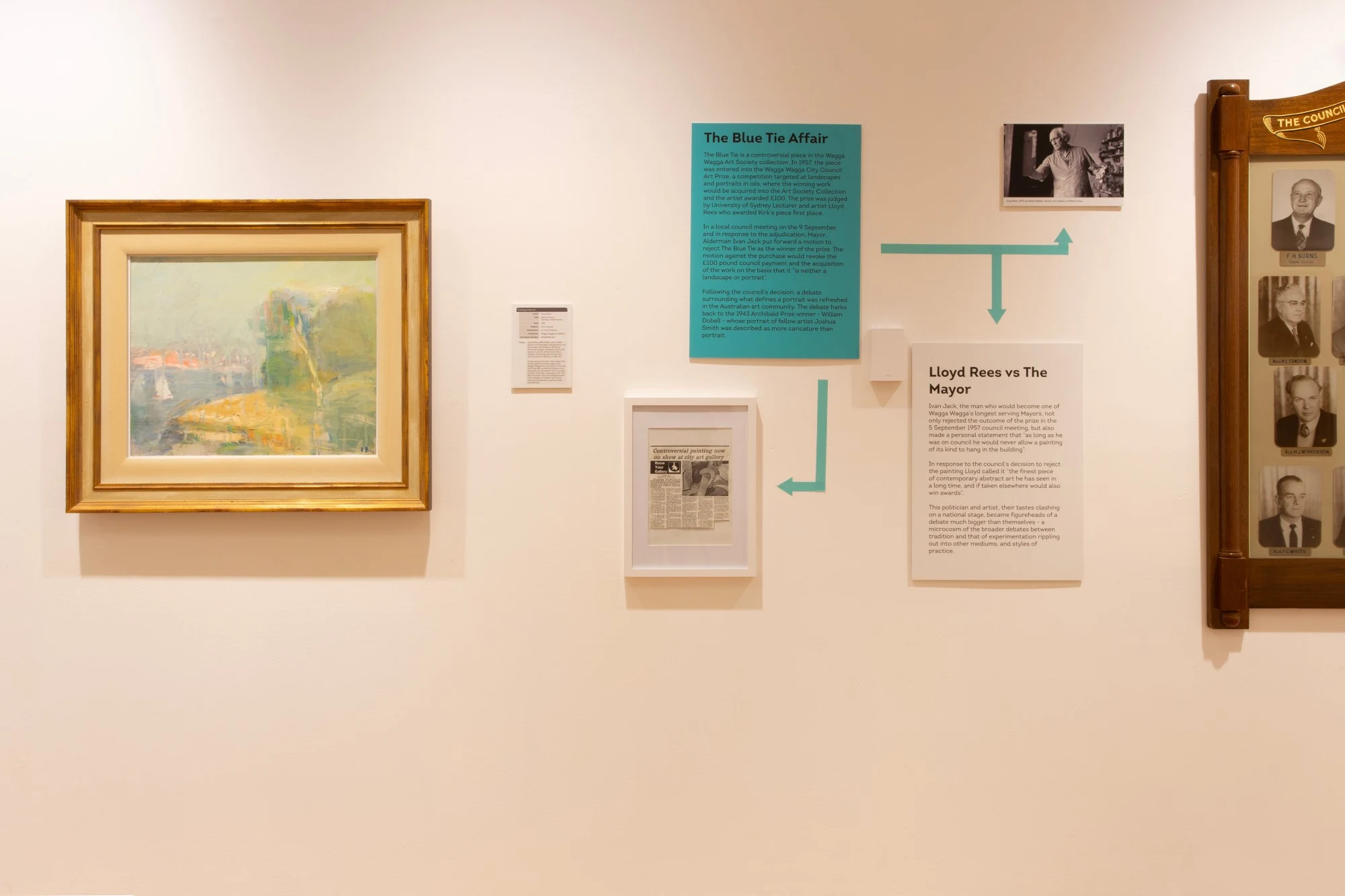
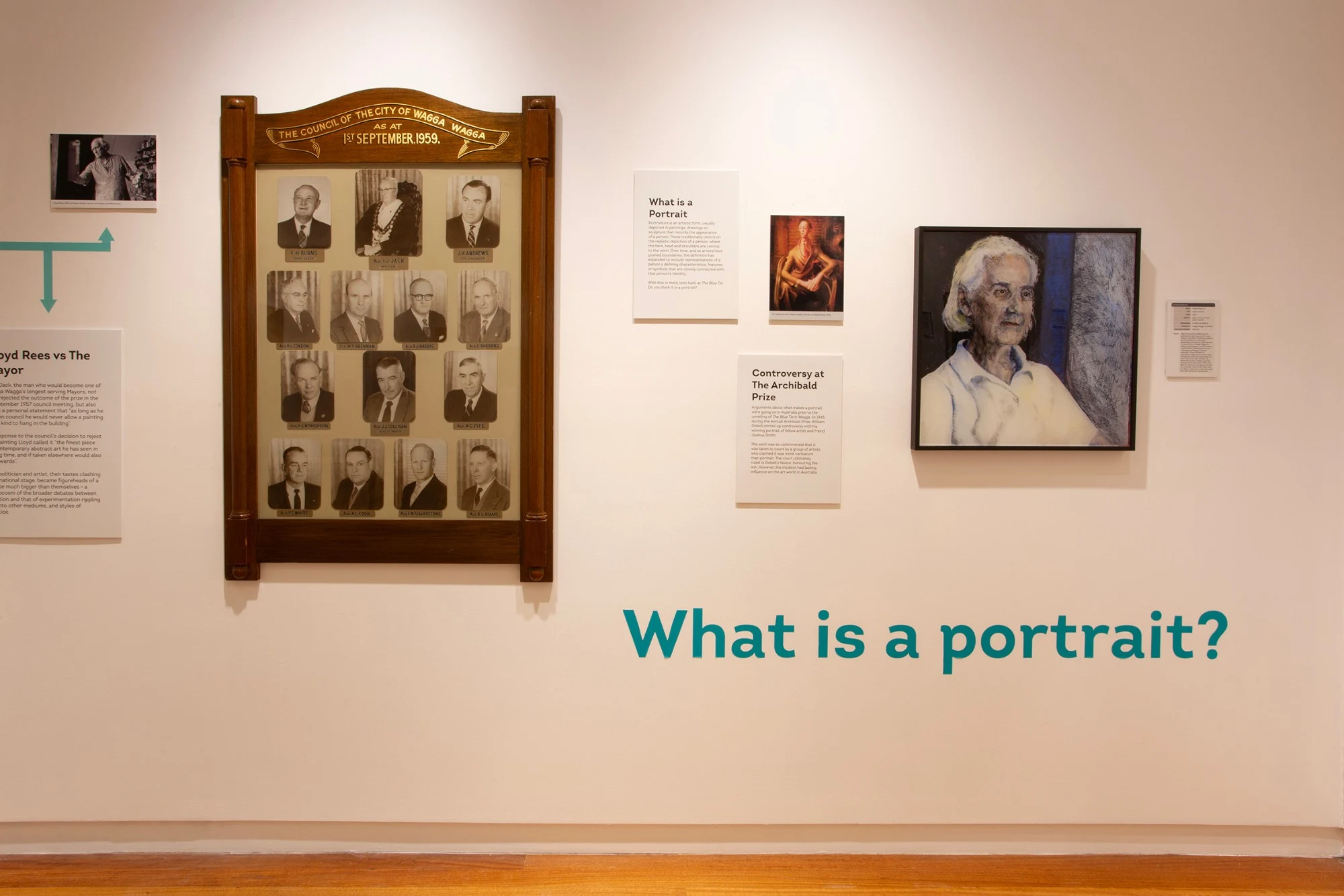
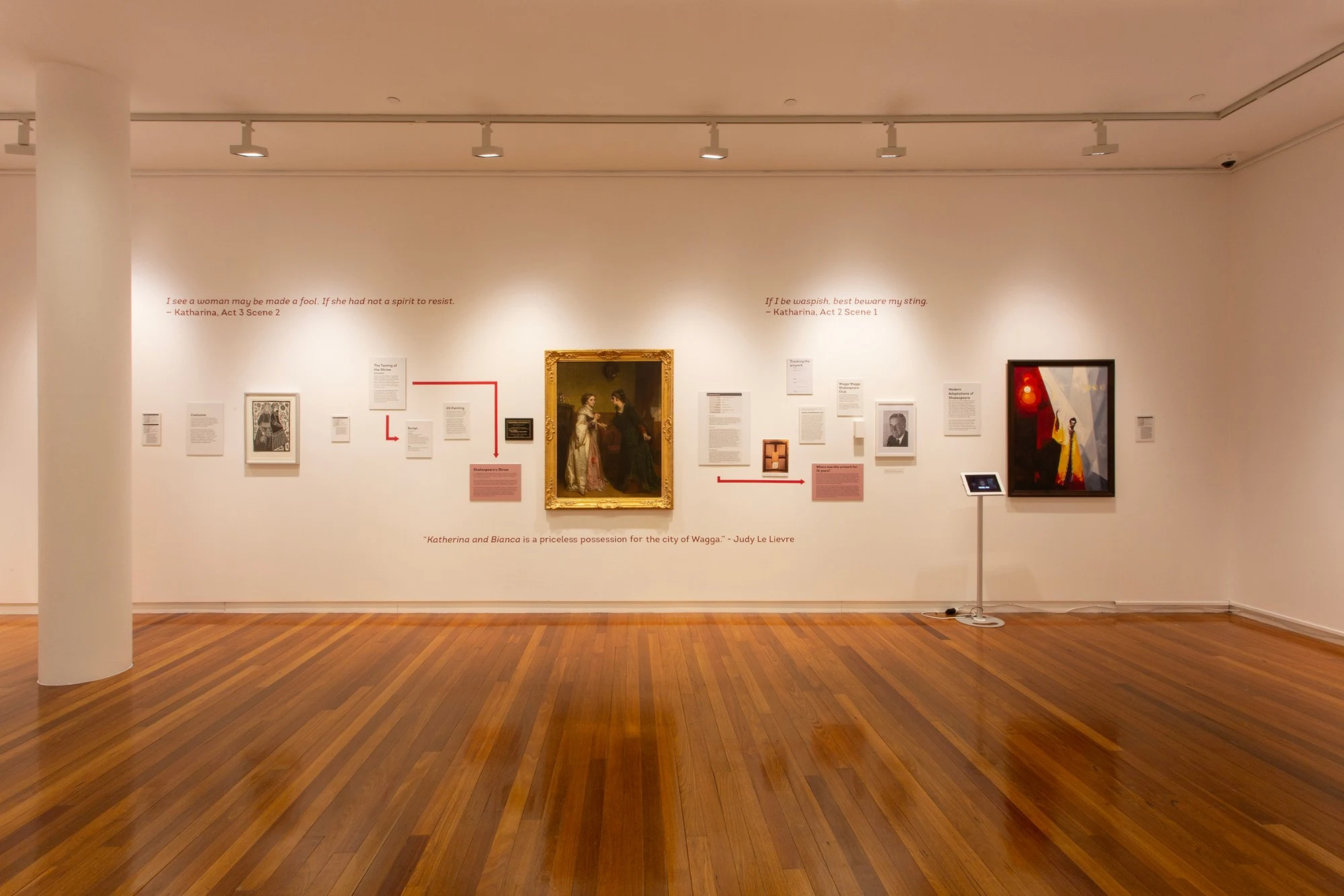
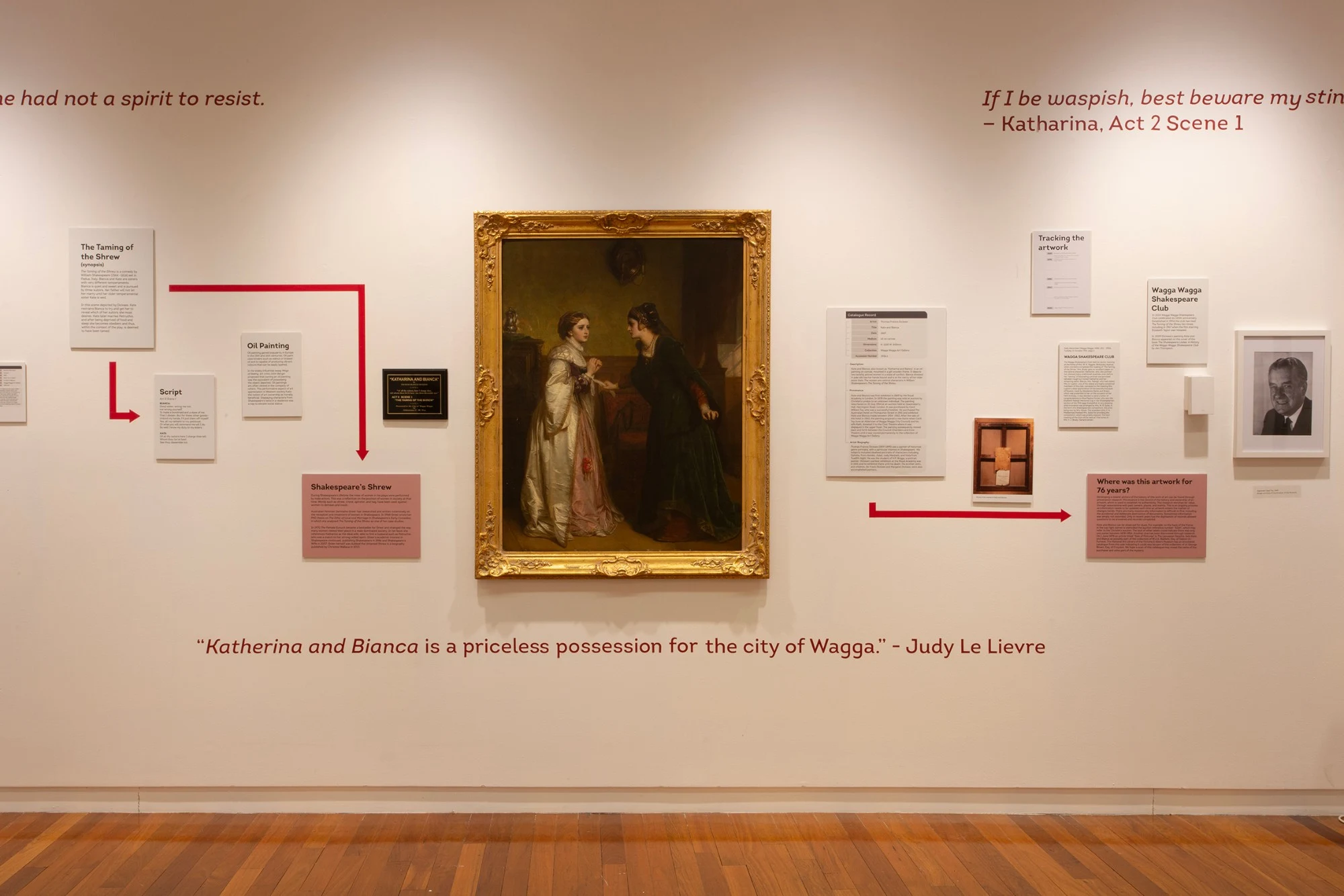
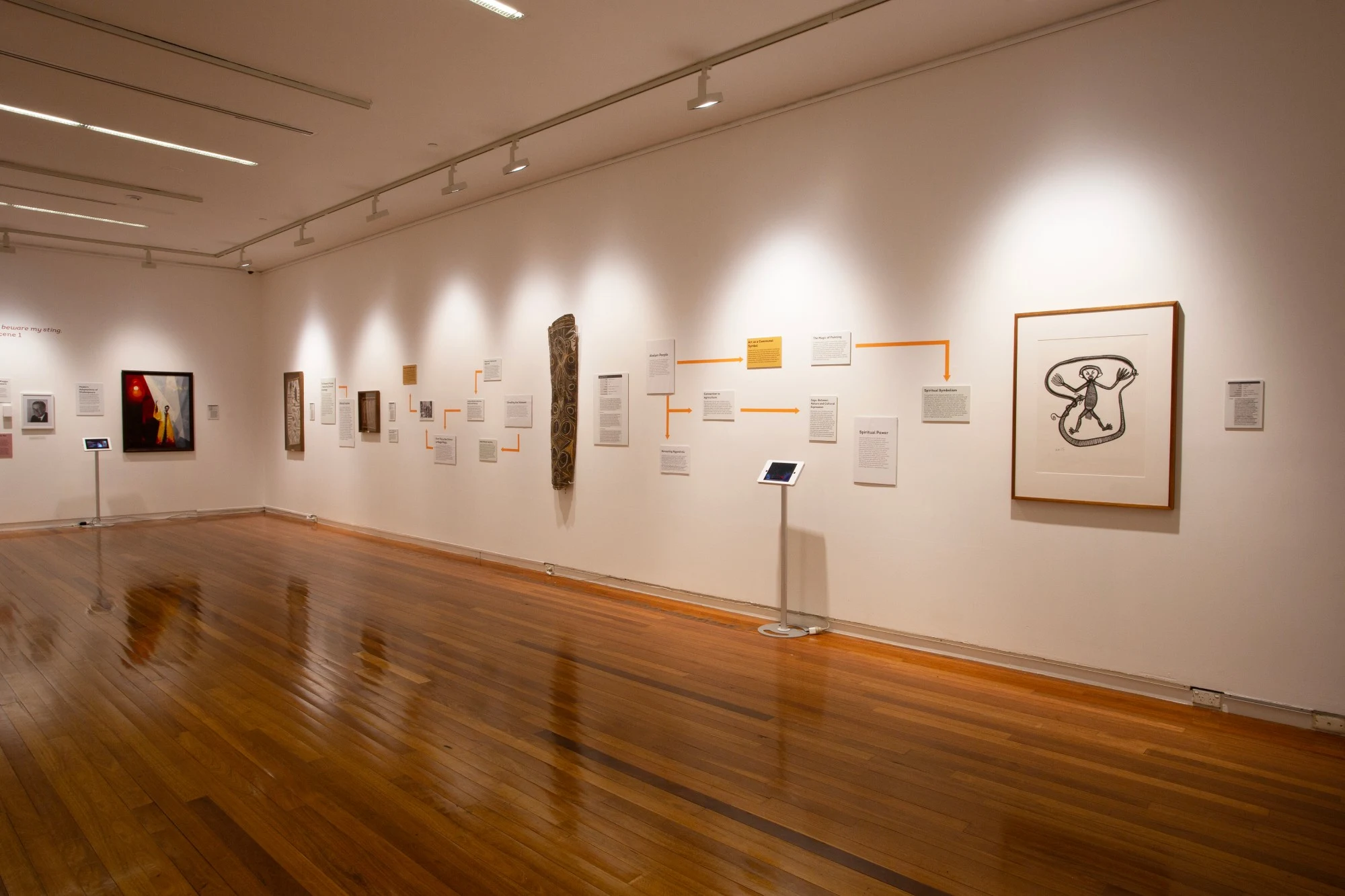
The three walls of Look at Me. One work, one colour, one line of questions on each: blue for The Blue Tie, red for Kate and Bianca, orange for Untitled. -
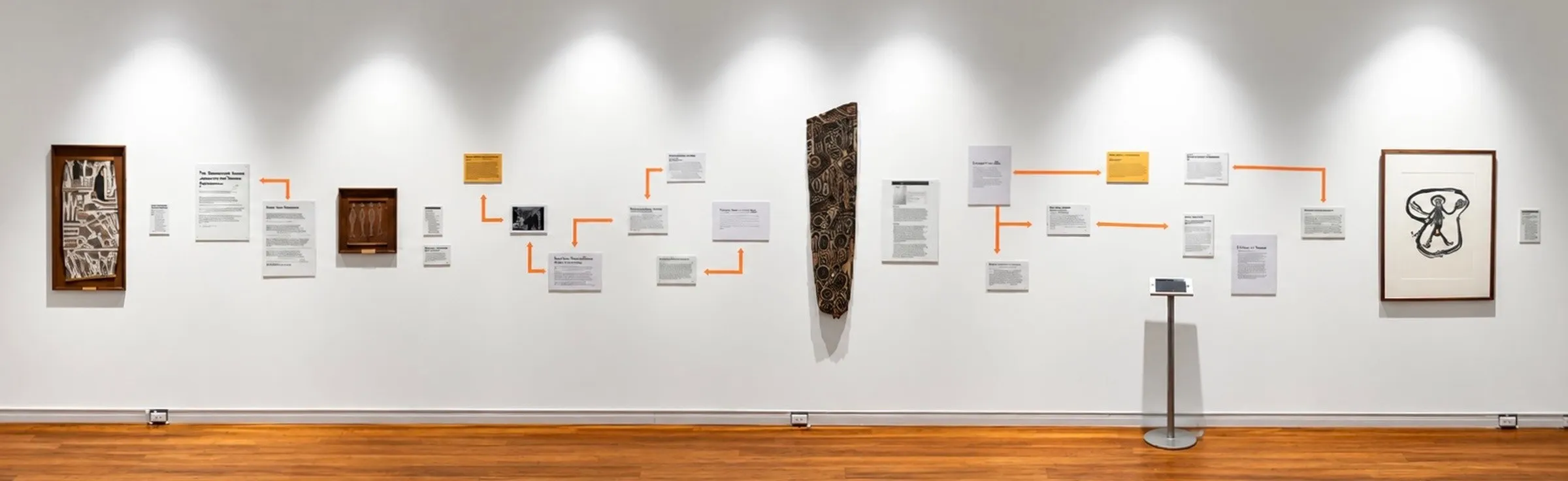
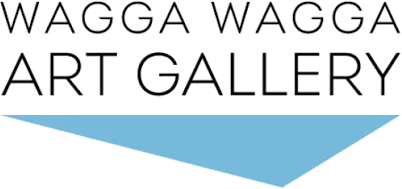
The Untitled wall, Wagga Wagga Art Gallery. -
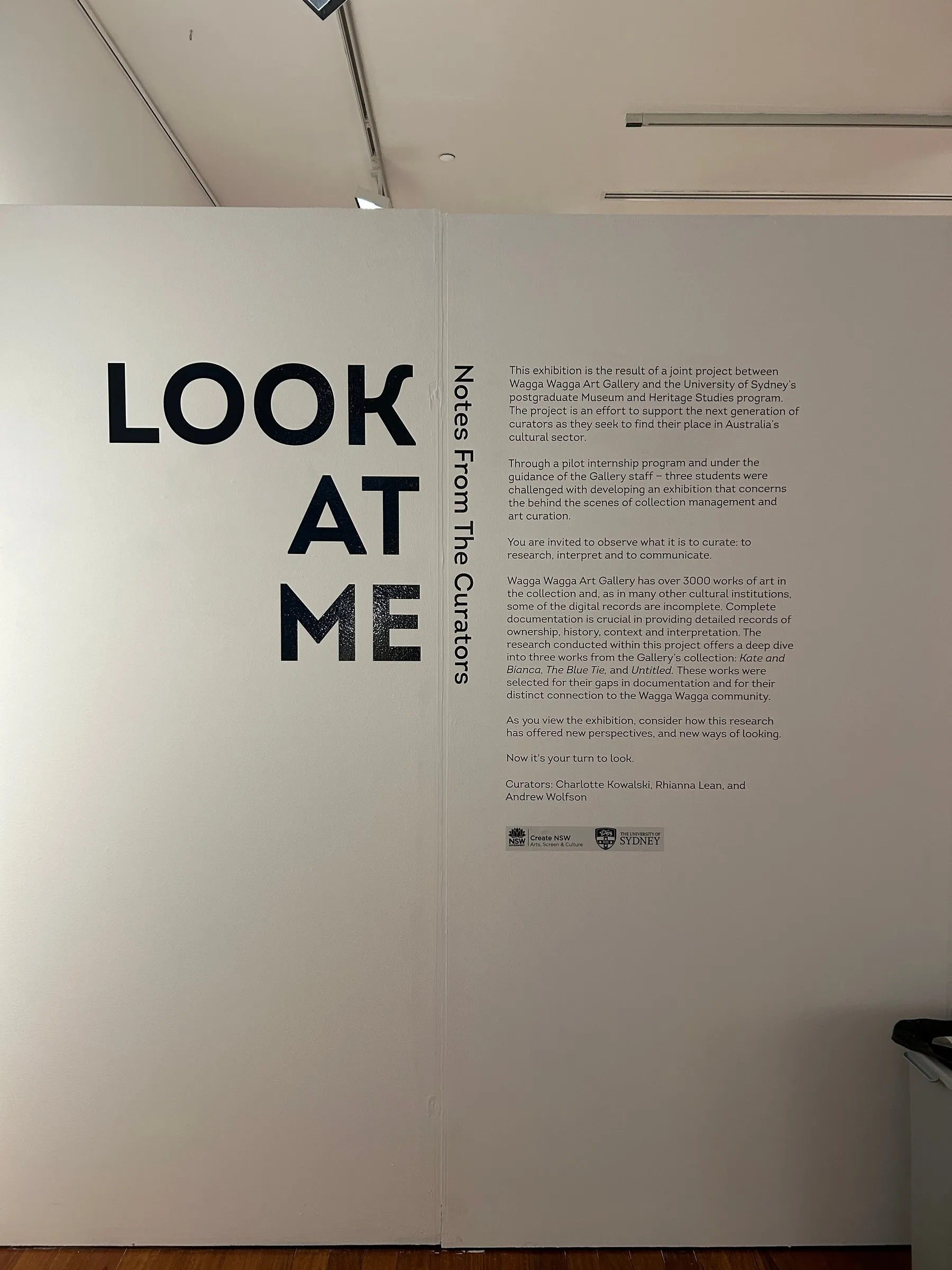
The title wall. -
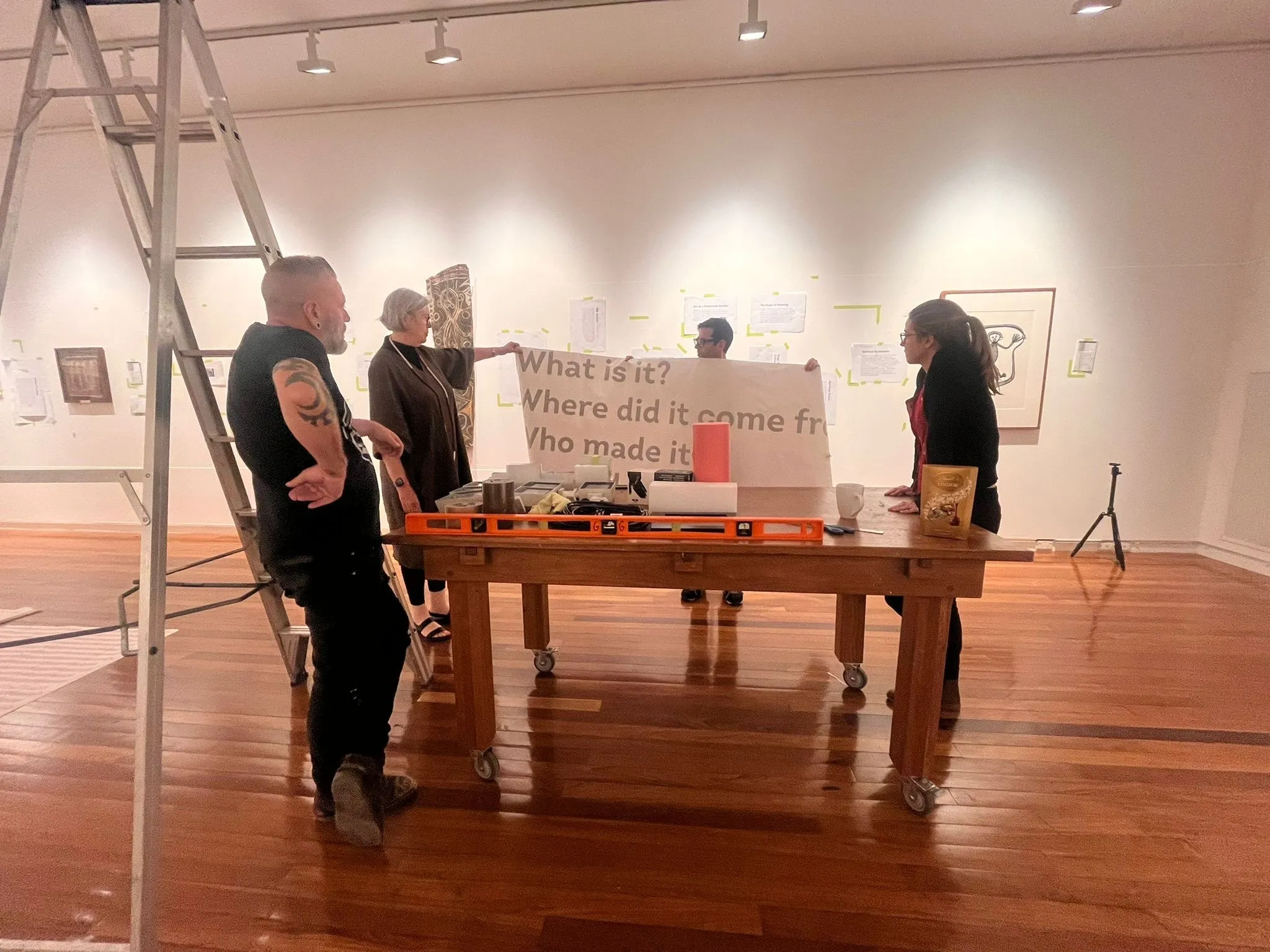
Planning the hang. -
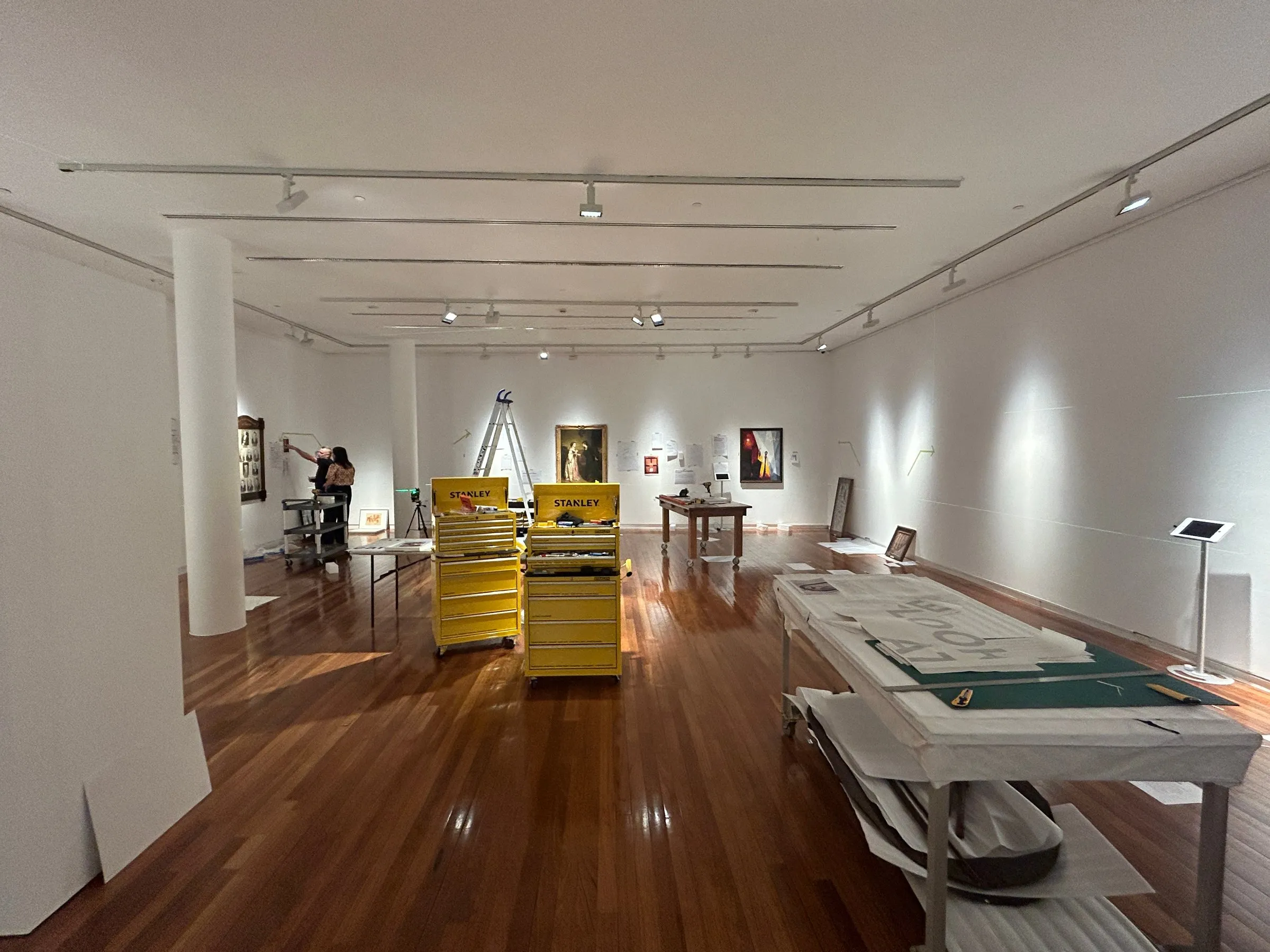
The gallery during installation. -
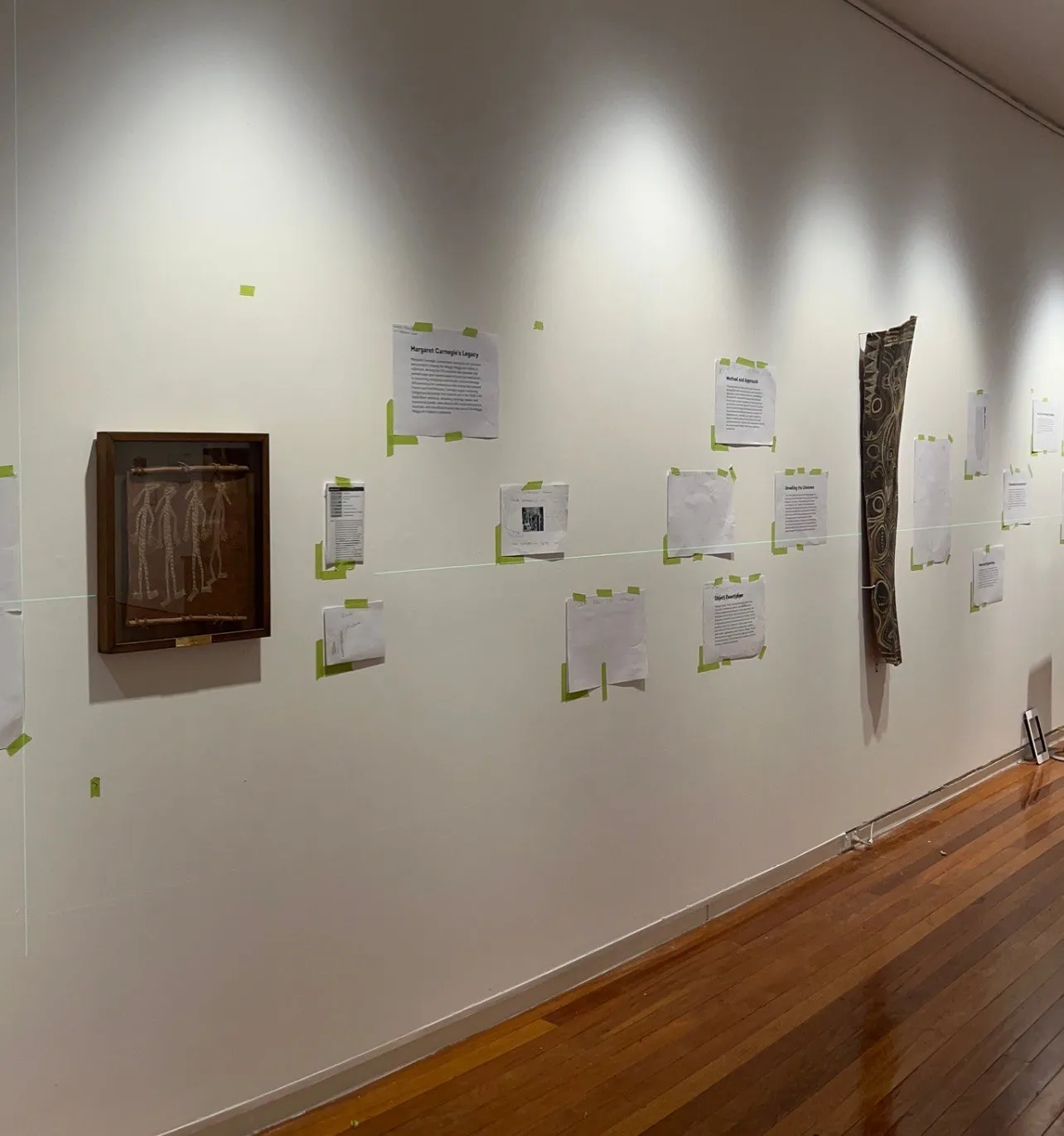
The arrows mocked up in tape. -
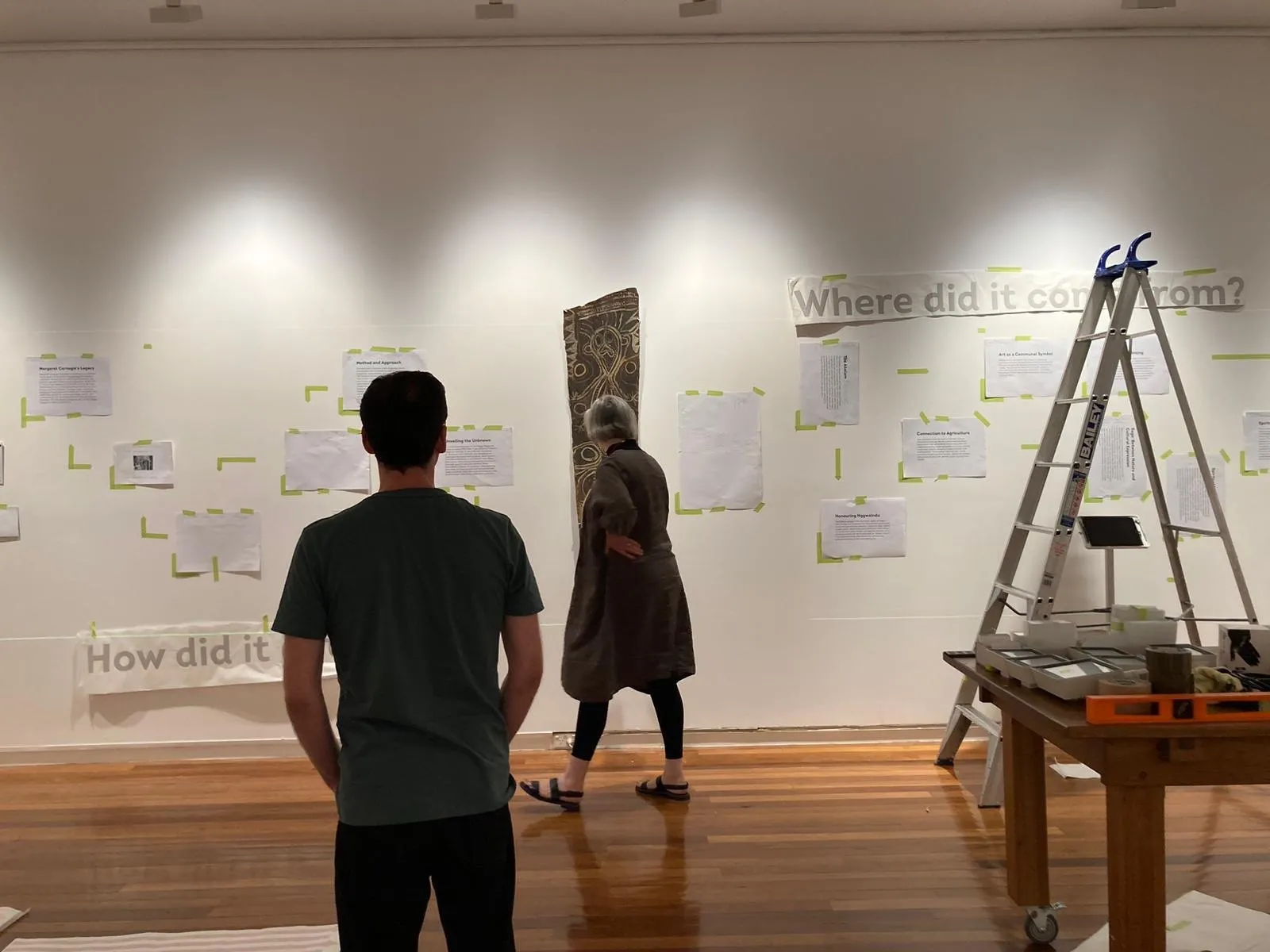
Final walkthrough before hang.
Watch and listen